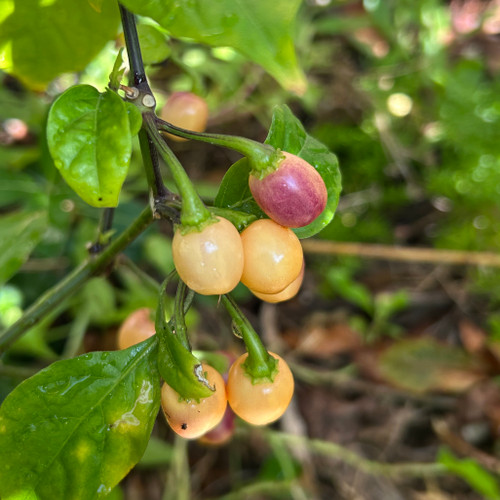
The Pimenta de Neyde pepper, also known as Pimenta da Neyde, is an exotic hot pepper that originated in Brazil. It was reportedly discovered growing spontaneously in the garden of Neyde Hidalgo, the woman after whom the pepper was named. Although its exact genetic background has not been conclusively established, it is widely believed to be a natural hybrid. The pepper has gained popularity because of its unusual coloration, distinctive appearance, and potential for breeding new pepper varieties.
One of the most remarkable characteristics of the Pimenta de Neyde pepper is its deep purple to nearly black coloration. The elongated pods typically grow approximately 2–3 inches long and have a glossy appearance. The plant itself is equally attractive, featuring dark purple leaves and stems, along with white flowers that may display purple markings. Plants commonly reach around 2–4 feet tall, depending on growing conditions, making them suitable for garden beds, containers, and ornamental displays.
The Pimenta de Neyde pepper is known for its substantial heat, with commonly reported estimates ranging from approximately 100,000 to 250,000 Scoville Heat Units (SHU). This places it within the general heat range of Habanero peppers, making it significantly hotter than Jalapeños and Cayenne peppers.
Pimenta de Neyde peppers can be used in a variety of culinary applications, including hot sauces, salsas, marinades, spicy condiments, and cooked dishes. Their fruity flavor pairs well with ingredients such as garlic, onions, citrus, tomatoes, and tropical fruits. They can also be incorporated into stews and other recipes that benefit from concentrated heat. Because of their intensity, it is best to begin with a small amount and adjust to taste. While the peppers are edible, their dark coloration and attractive plant structure also make them particularly desirable as ornamental plants. They are well suited to patio containers and specialty pepper gardens, where their nearly black fruit and purple foliage create a dramatic display.